
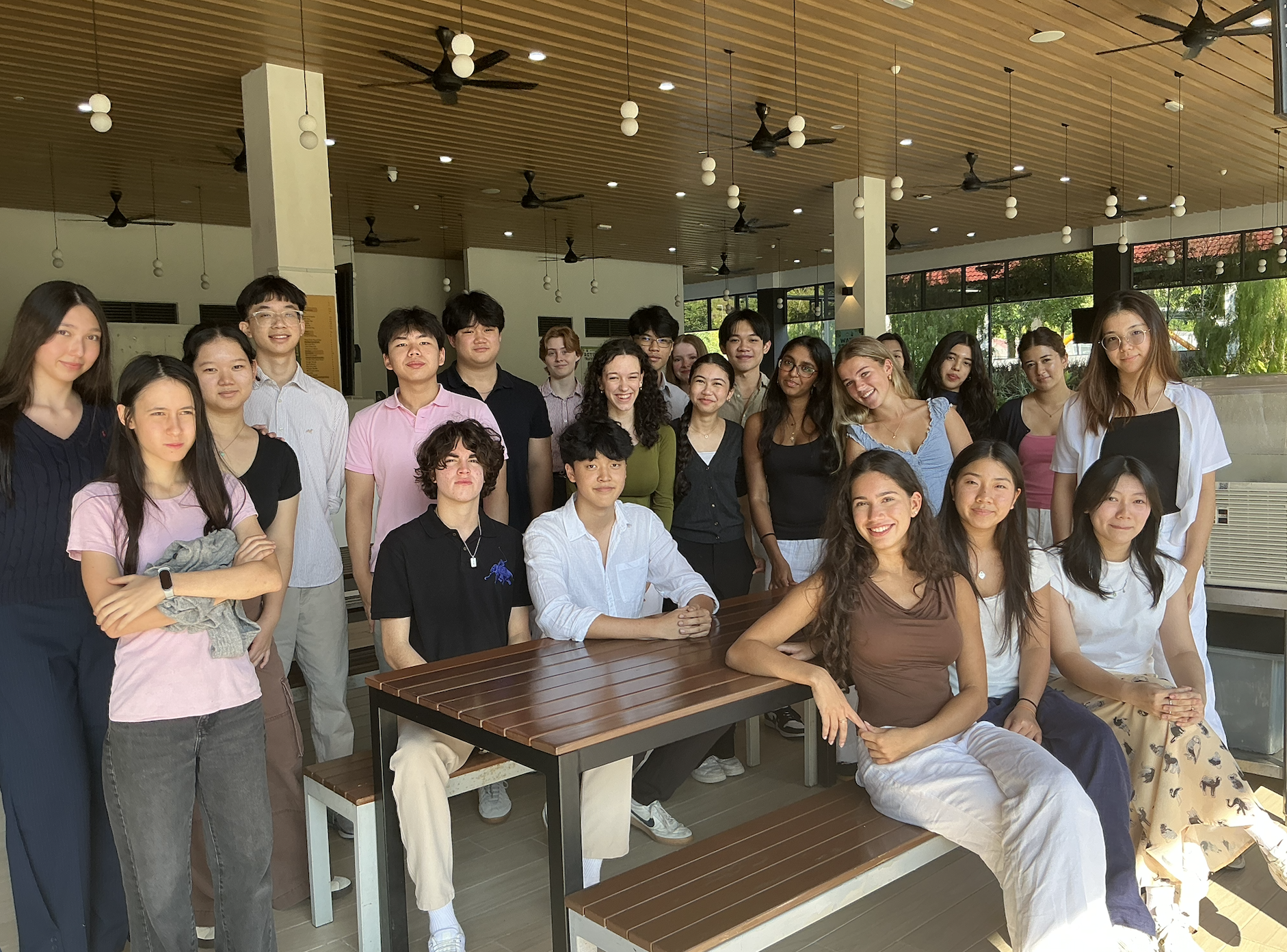
What happens when students are given the freedom to pursue the questions that genuinely interest them? At our Extended Project Qualification (EPQ) presentation showcase, the answer was clear: curiosity drives meaningful learning.
After months of research, planning, problem-solving and independent study since Term 1, our EPQ students reached an important milestone as they presented the outcomes of their projects to staff and peers. More than simply sharing research findings, these presentations represented the culmination of a journey that challenged students to think critically, manage complexity and communicate confidently.
The EPQ is intentionally different from traditional classroom learning. Students take ownership of their projects from the very beginning, selecting research topics that align with their interests and aspirations before designing a process to investigate them. Throughout the journey, they learn to manage deadlines, navigate setbacks, evaluate sources, refine ideas and adapt their approaches when things do not go as planned.
Presentation day provided students with an opportunity to showcase not only what they had discovered, but also how they learned.
Each student confidently presented their findings before participating in up to ten minutes of questioning from the EPQ staff team. These challenging question-and-answer sessions encouraged students to defend their viewpoints, justify their methodology and demonstrate deeper understanding beyond what was presented on screen. While often one of the most demanding parts of the process, the questioning element also reflected one of the most valuable aspects of the EPQ experience: learning to think critically under pressure and articulate ideas with confidence.
One of the most impressive aspects of the showcase was the extraordinary diversity of topics explored.
Students examined questions that tackled society, history and culture from unique perspectives. Research included investigations into how changing Western societal contexts have shaped and been reflected in horror films since 1922, explorations of love and loss in Wuthering Heights through Black Romanticism and Realism, and discussions around how misogyny influences perceptions of historical figures through the lens of Cleopatra.
Others focused on major global and societal challenges. Students explored how education policies in Afghanistan, Malaysia and Finland shape employment opportunities and psychological wellbeing among young people, questioned whether healthcare should be considered a fundamental right or a privatised service, and analysed how economic inequality has influenced identity politics in Malaysia.
Science and medicine also featured strongly. Projects investigated creatine bioenergetics across different demographics, evaluated the role of herbal remedies alongside evidence-based medicine, and explored whether targeted cancer therapies have improved treatment outcomes for HER2-positive breast cancer patients compared to traditional chemotherapy.
Students interested in sustainability, economics and innovation tackled equally complex issues. Research explored whether the benefits of space exploration justify the opportunity costs of environmental action, how sustainable architecture is influenced by cultural traditions and economic disparities across Southeast Asia, and how biophilic design principles can improve wellbeing and productivity within physical spaces.
Sport, media and popular culture emerged as another fascinating area of study. Students analysed differences in media coverage between women’s and men’s football and how this shapes investment and public perception, questioned whether the commercialisation of sport through the NBA ultimately creates more benefits than drawbacks, and investigated the factors behind the popularity of true crime television.
What united all these projects was not the topic itself, but the process behind them. Every student faced challenges: refining research questions, managing large volumes of information, balancing competing priorities and maintaining momentum over several months. Through this process, they developed resilience, independence and adaptability - skills that extend far beyond academic success.
The EPQ is often described as preparation for university, and this is certainly true. Students learn how to conduct independent research, manage long-term projects and communicate complex ideas effectively. However, its impact extends beyond higher education preparation. It encourages students to become more confident thinkers, more effective communicators and more curious learners.
A huge thank you must also go to the EPQ staff team, whose guidance, mentorship and carefully prepared questioning sessions helped challenge students to push their thinking further throughout the process.
As the presentations concluded, one thing became clear: the true value of the EPQ is not simply the final product. It is the journey students take to get there - asking difficult questions, embracing uncertainty and developing the confidence to explore ideas that matter.
We are incredibly proud of what our students have achieved and look forward to seeing where their curiosity takes them next.