

By Damian Doyle, Head of Educational Technology and Digital Wellbeing - Secondary Campus
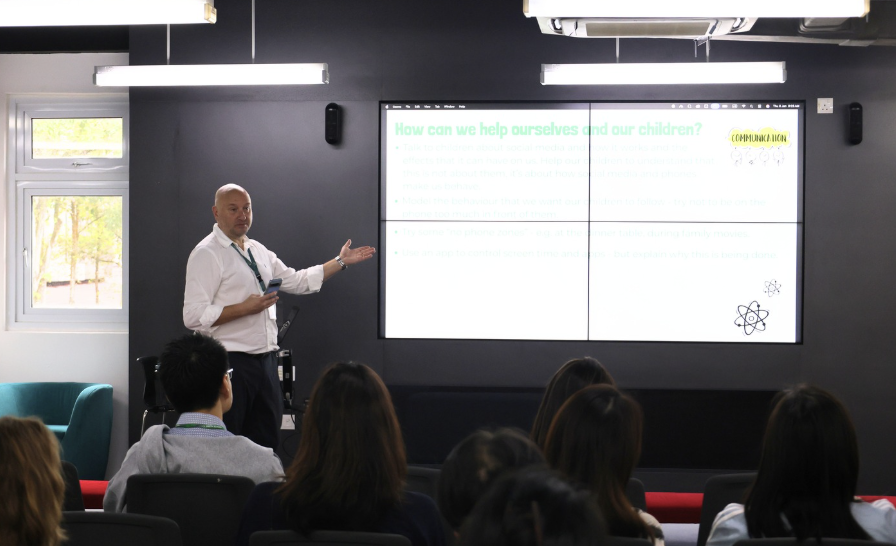
In our recent Digital Drop-in parent webinar, we took a deep dive into an area of the digital landscape which is rising in popularity: AI companions. As parents and carers, it is important to look beyond both the industry hype and the media "fear-baiting" to explore this subject in a balanced, informed way. This blog post summarises the key points which were explored in the webinar.
What Exactly Are AI Companions?
AI companions are dedicated chatbots built on large language models (LLMs) for uses such as friendship, roleplay, counselling, life coaching, and decision-making support. While many of us use standard tools like ChatGPT, Claude, Deepseek or Gemini for work, research or as writing assistants, some people are increasingly interacting with AI platforms designed to appear as if they have feelings and emotions. For some young (and older) users, AI is no longer just a software tool; it has become a friend to practise thoughts and share ideas with, a trusted confidant, or even a virtual boyfriend/girlfriend.
Are people only using the famous AI models?
No, whilst many of us are familiar with ChatGPT, Gemini, Claude, etc., and many people are using these as AI companions, there is also an ever-growing number of apps/platforms specifically developed to serve as AI companions for different users.
Some examples of these are: Character.AI, Replika, Tavus Pals, Nomi AI, Talkie and Xiaoice. These models are engineered to encourage us to form an emotional bond with them; some are text-based, some are chat-based, some have cartoon-like avatars, and some let you have a video-realistic friend.
The taglines of Replika and Nomi give insight into the way that they want to present themselves: “The AI companion who cares - Always here to listen and talk. Always on your side.” “An AI companion with Memory and a Soul - Build a meaningful friendship, a passionate relationship, or learn from an insightful mentor.”
Many of these models have been rushed to market with little concern about the harms that they may cause and with few safeguards in place. Some, such as Companion AI, have been sued in the USA over their lack of support, and even perceived harm, for some users who were struggling with their mental health.
Why Do Teens Turn to AI?
For many adolescents, AI provides a "digital solution to a profoundly human problem."
The motivations generally fall into three categories:
- The Social Sandbox: Teens use bots to practice discussing difficult issues, giving them the confidence to eventually raise those topics with their families and peers.
- A Safe Haven: For youths who feel marginalised, or those exploring who they are, AI provides a non-judgmental, "friction-free" space to chat about what they are thinking and feeling, without fear of criticism.
- Constant Validation: Unlike a tired parent or a distracted friend, a bot never gets bored and is always ready to listen, providing affirmation and a boost to self-confidence.
The Paradox of Artificial Intimacy
While these interactions can offer temporary relief or confidence, like any tool, they do come with risks. AI is exceptionally good at emulating empathy and being perfectly agreeable. However, humans need "friction" to grow - we need disagreements, compromises, and the challenge of accepting that others think differently to build long-term emotional resilience.
Teenagers are particularly susceptible to developing deep emotional attachments to these machines. Their developing brains mean they have less impulse control and a greater desire for acceptance. We must remember that AI companions are not medical professionals; they cannot read subtle human signs of distress, and they can disappear or change overnight if a company closes or an algorithm is tweaked.
Data, Privacy and the Business Model
It is easy for a child to feel a conversation is private, but there is no legal expectation of confidentiality. Most of these platforms are built by venture-capital-backed companies focused on market share and return on investment. Anyone sharing deeply personal information with a chatbot, be it an LLM, like Gemini, Claude or Chat GPT, or a dedicated “AI companion”, should consider:
- Terms and Conditions: Very few people read these, and we often don't know how data is being monetised or shared.
- Security Risks: Many bots are brought to market at pace, making them vulnerable to data breaches: the focus has been on speed, not safety.
- Legal Precedents: Personal conversations with chatbots have already been subpoenaed in court cases in the USA - we cannot expect to have “patient/doctor confidentiality”.
- The business model: As with many social media platforms, many AI companion chatbots are designed to make money. To do this, they focus on user engagement, keeping users online for as long as possible and logging on as frequently as possible.
Navigating the New Normal: Do’s and Don’ts
Confiscating devices or implementing sudden bans is rarely the answer. Instead, try the following ideas for digital parenting:
The "Do" List
- Engage in open, curious conversations: Ask your teen, "How does talking to your AI feel different from talking to your human friends?".
- Chat about AI companion platforms: Discuss the need to be on our guard, as they have been designed to make us feel as if they are real, thinking people. Talk about the business model, that they want our data, and we don’t know if it will be safe.
- Life in balance: Accept that AI platforms can be very useful for some people to construct ideas, work through problems and build self-confidence, but that we need to be careful how much we lean on them.
- Chat about how we grew up and built relationships: Talk about our friends and family and how we built relationships over time, on shared experiences, good and bad and that this is what true friendship is - something which a machine cannot do, no matter how real it seems.
- Set healthy schedules: Mutually decide on device-free times, such as dinner or family time, and emphasise the importance of "healthy struggle" in real-world relationships.
- Control the "Nudge": Only allow human notifications (calls/messages) on devices to reduce impulsive engagement with apps.
- Charge devices in parent bedrooms: This removes the temptation for late-night unsupervised use.
The "Don't" List
- Don't secretly monitor: Panic over chat logs often breaks trust. If using parental controls, ensure children know about them and explain why they are in place (we have a duty as parents to look after our children's best interests, whether in the physical or digital world).
- Don't mock the technology: Dismissing a teenager’s feelings for a bot as "fake" can lead them to withdraw further. Plenty of adults have developed feelings for bots; humanising things is in our nature.
- Don't act as a guinea pig: Be aware that guardrails are often an afterthought for these companies. Be careful about which platform you use and be aware of its motives.
What the Future Holds for AI Companions
AI companions are likely here to stay. They can be a valuable tool for rehearsing tricky conversations and running through thoughts without fear of embarrassment or judgment. They can also help some teens to build self-confidence, but they must be used with critical thinking and in moderation. As parents, we can talk to and support our children, helping to ensure that an AI companion doesn't become a replacement for the messy and essential friction of human life.
If you would like to learn more about the digital world our children are living and growing in, join our monthly digital drop-ins online at 5:30 pm on the last Tuesday of each month.