
The Middle School years are an important stage of growth and change. As children become more independent, they are navigating new friendships, greater responsibility, increased digital engagement and important decisions about their wellbeing and future.
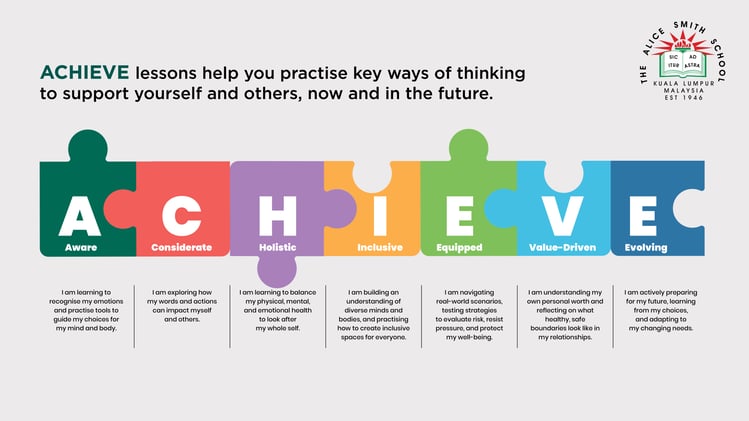
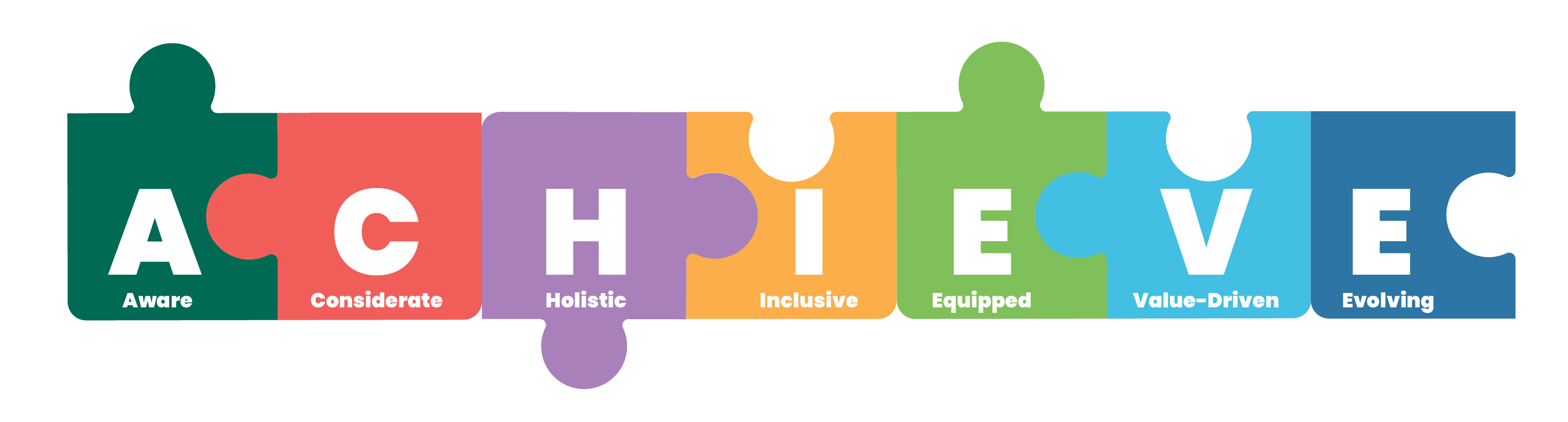
At Alice Smith School, we recognise that supporting children through these years is about more than academic achievement. Our bespoke ACHIEVE programme helps students develop the knowledge, skills and confidence they need to manage the opportunities and challenges of adolescence - both in school and beyond.
The programme provides support across a range of areas, including belonging and relationships, online and in-person safeguarding, digital wellbeing, organisation, community action and service learning, health and wellbeing, higher education and careers, first aid and finance.
Building healthy minds and positive habits
Health and wellbeing are central to the ACHIEVE programme. Students explore practical techniques and tools that they can use in everyday life, while also developing a greater understanding of their thoughts, emotions and responses.
For younger Middle School students, this includes learning to recognise the difference between responding and reacting. As students progress into Years 8 and 9, they are introduced to ideas around managing their thoughts and behaviours, including concepts from Professor Steve Peters’ The Chimp Paradox.
Students are encouraged to think about the different parts of their thinking, from instinctive reactions to more considered responses and how habits and past experiences can influence the way they behave.
These conversations also encourage students to identify what helps them reset when they are having a difficult day. What brings them peace? What brings them joy? By developing this awareness, students can begin to build their own toolkit for managing their wellbeing.
Understanding friendships and belonging
Friendships become increasingly important during the Middle School years, and ACHIEVE gives students opportunities to reflect on what healthy relationships look and feel like.
Across Year 7 and Year 8, students build their self-awareness by reflecting on their emotions and how to regulate these. They explore how this emotional regulation can support communication and connection with their peers. Year 8 students progress in their learning around mind management by understanding the theory of The Chimp Paradox. They also build on their confidence in managing friendships by looking at how setting and maintaining boundaries in relationships can benefit their self-esteem and wellbeing.
By Year 9, students continue to learn through the lens of The Chimp Paradox - understanding how friendship choices can be determined by whether they use their “Chimp” or “Human” brain. Learning that if they use their “Chimp” brain they may make friendships based on status, popularity or familiarity but if they use their “Human” brain they are more likely to build genuine friendships based on qualities such as honesty, loyalty, positivity, humour and emotional self-control. This supports students in understanding that friendships can change and shift, and the importance of open communication with their peers.
These are conversations that extend beyond the classroom, giving students language and strategies they can use when navigating real-life relationships.
Keeping children safe in a digital world
Safeguarding is another important part of ACHIEVE; empowering students to safeguard themselves, whether this be online or in person..
Students are reminded of the PANTS acronym, reflecting on what consent and body boundaries are. Students learn how to recognise “red flag” feelings and behaviours, understand when something does not feel right and identify trusted adults who can support them. They are also encouraged to take practical action when they encounter worrying online communication, including screenshotting, reporting and blocking inappropriate content or communication.
Within students’ learning around supporting their health, we look at the risks of substances in Year 9. This includes the laws and consequences surrounding smoking, vaping and alcohol. They will look at what can influence someone to make certain choices and how to navigate situations where they may feel pressured, helping them to make healthy and informed decisions for their bodies and minds.
Developing independence and organisation
As students move through Middle School, they are also expected to take increasing ownership of their learning and responsibilities.
ACHIEVE recognises that organisation and wellbeing are closely connected. Year 7 students have focussed time to build practical habits around managing their schedules, equipment, independent study and digital learning platforms such as Google Classroom and Gmail.
The aim is not simply to make students more organised, but to help them find a healthy balance as their responsibilities grow.
A partnership between school, students and families
ACHIEVE works best when the conversations continue beyond school. Parent workshops provide families with practical strategies, questions and resources that can be echoed and used at home.
From asking a child what helps them reset their mood, to discussing what makes a good friend or how they recognise “red flags”, small conversations can create valuable opportunities for connection.
Ultimately, ACHIEVE is about helping Middle School students become increasingly confident in understanding themselves, navigating relationships, making healthy choices and taking responsibility for their wellbeing.
These are skills that extend far beyond the Middle School years. By equipping students with these tools ACHIEVE helps prepare them not only for the next stage of their education, but for the opportunities and challenges of life beyond school.
Similar workshops and sessions will also take place with our Upper School and Senior School students, with the content adapted to reflect their age, stage of development and the opportunities and challenges they may encounter.